



 English
 Français
 Deutsch
 Italiano
 Português
 Русский
 Español
 简体中文
简体中文 हिन्दी
 日本語
日本語
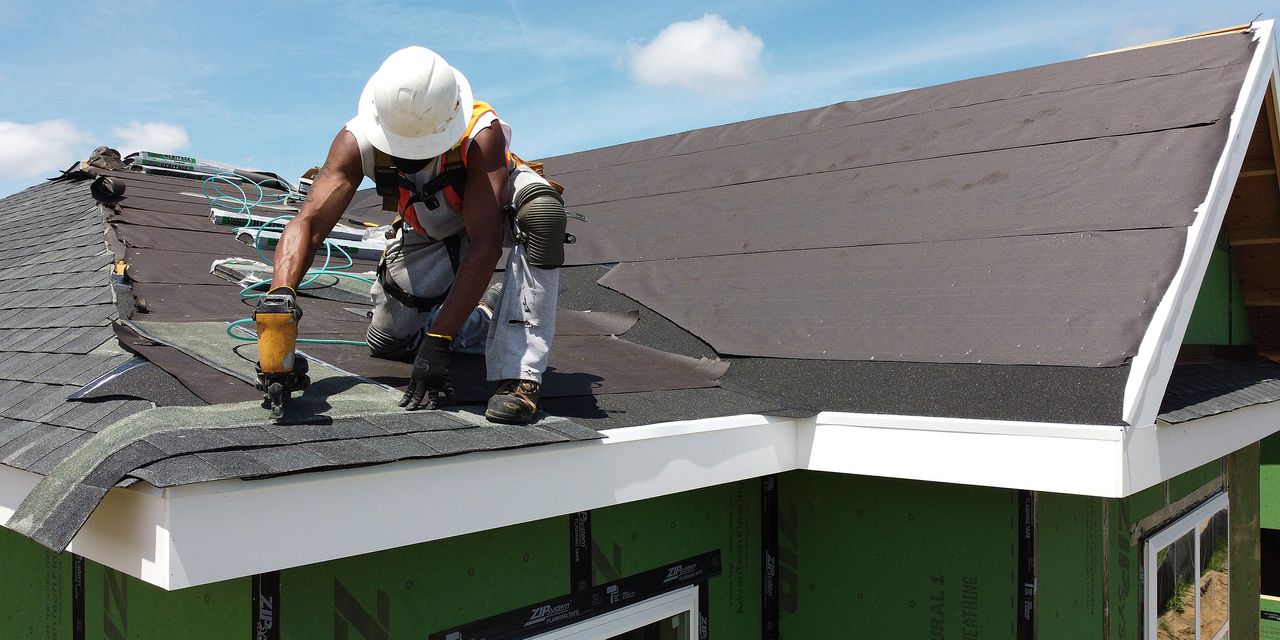
Newly constructed homes have been in demand in recent months.
Al Bello/Getty Images
New-home construction climbed in July, as a big run-up in housing costs continue to cast a shadow for potential buyers and builders.
Housing starts, a government measure of the start of construction on new housing units, rose 3.9% in July to a seasonally-adjusted annual rate of 1.45 million, up from June’s revised rate of roughly 1.40 million. Consensus estimates compiled by FactSet had called for a seasonally-adjusted rate of 1.44 million.
Single-family starts were the strongest, rising 6.7% in July from June, while new construction in large multifamily projects was flat.
Despite the increase, storm clouds are gathering for new-home construction as financing costs and home prices remain relatively high. A National Association of Home Builders index tracking builder confidence slumped six points in August to a level of 50—its first decline after seven straight months of gains.
The decline to a reading of 50 puts the index at its break-even point, the level at which builders are equally split on market conditions. The index’s components show that builders were overall positive on conditions for present and future sales, but largely negative on traffic of prospective buyers.
Higher mortgage rates were part of the explanation. The average 30-year fixed-rate mortgage has in recent weeks been climbing, with
Freddie Mac’s
weekly gauge coming in just below 7% last week. The closely watched survey could surpass 7% this week: The 10-year Treasury yield, with which mortgage rates often move, rose Monday and early Tuesday.
“Rising mortgage rates and high construction costs stemming from a dearth of construction workers, a lack of buildable lots and continuing shortages of distribution transformers put a chill on builder sentiment in August,” Alicia Huey, the home builder group’s chairman, said in a statement.
The confidence reading is a “reminder that housing affordability is an ongoing challenge,” said Huey. About two in five homes sold in the second quarter were considered affordable for families with the median income, the trade group said last week—the second-lowest reading since it began consistently tracking the data in 2012.
Permits, a forward-looking indicator of new-home construction counting the new units authorized by localities, inched up 0.1% to a seasonally-adjusted annual rate of 1.44 million in July—lower than the 1.45 million expected by consensus estimates.
Home affordability is particularly stretched for first-time buyers—who in the second quarter typically spent roughly 41% of their income on their mortgage payment, the National Association of Realtors said last week. On a monthly payment basis, it costs more to buy a home right now than rent one, assuming a 5% down payment, according to Zillow data.
Indexes tracking both overall and first-time buyer affordability were at their lowest levels since the National Association of Realtors began tracking the data in 1989.
Despite headwinds posed by housing costs and construction constraints, “demand for new construction continues to be supported by a lack of resale inventory, as many homeowners elect to stay put because they are locked in at a low mortgage rate,” said Huey of the home builders group.
Multifamily starts are set to fall given the large number of multifamily projects under construction, wrote Peter Boockvar, an economist and the chief investment officer at Bleakley Financial Group. The count of new apartments in buildings with five or more units under construction pushed to a record 986,000 in July.
“The key question is the direction of single family and how it stands up to the now 7.5% mortgage rate,” he wrote. “Yes, consumers are leaning on new build for choices but there are price points that just don’t work relative to family income, even with the discounting builders are doing to mitigate the price shock.”
A Moody’s Investors Service note last week predicted that homebuying costs would remain high through 2024. “For new homes, incentives and other factors will lead prices and builder margins to fall through 2024,” the analysts wrote. “The lean inventory of existing homes for sale—homeowners who locked in low mortgage rates are hesitant to sell—will only somewhat mitigate strains on builders’ revenue and margins.”
Write to Shaina Mishkin at [email protected]
Read the full article here