



 English
 Français
 Deutsch
 Italiano
 Português
 Русский
 Español
 简体中文
简体中文 हिन्दी
 日本語
日本語
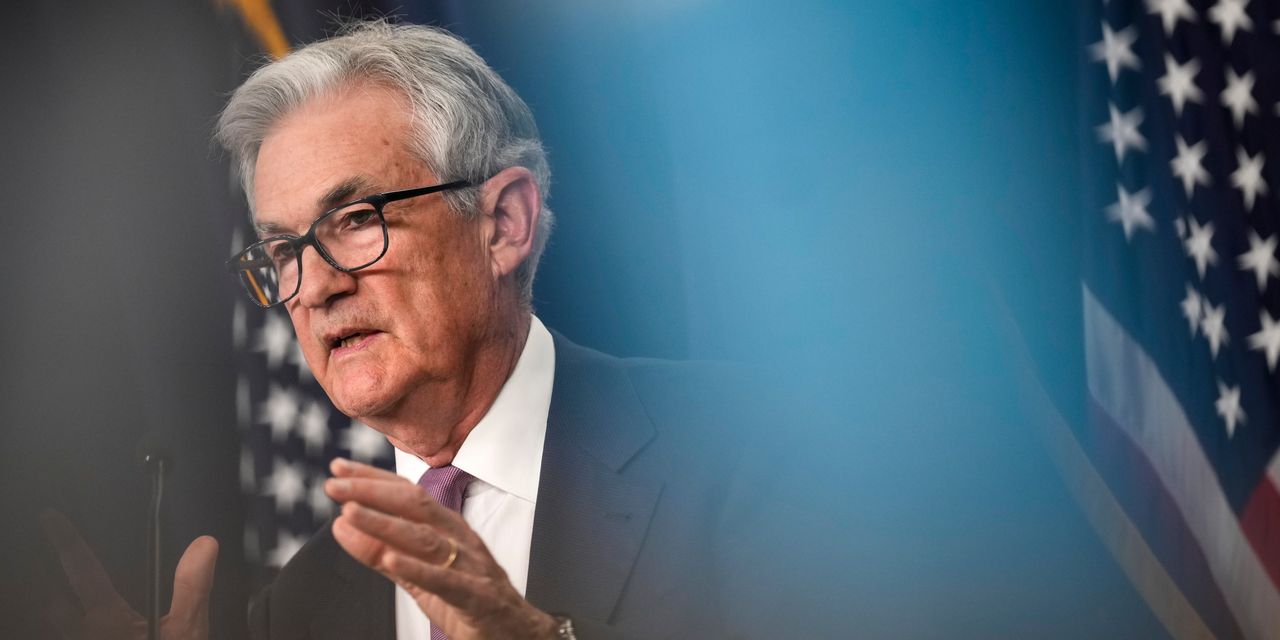
Federal Reserve Chair Jerome Powell has said the central bank will be “restrictive as long as we need to be.”
Drew Angerer/Getty Images
Nearly all policy makers at the Federal Reserve’s June meeting believed it was appropriate to hold the bank’s benchmark interest rate steady, but investors should still expect borrowing costs to rise through the end of the year.
Although the Federal Open Market Committee, opted to skip a rate hike in June, they aren’t likely to do so in July. With inflation still well above the Fed’s 2% target rate, the minutes from the June 13-14 meeting, released Wednesday afternoon, revealed that committee members believe maintaining a restrictive stance for monetary policy would be “appropriate” going forward. “Almost all participants noted that in their economic projections that they judged that additional increases in the target federal funds rate during 2023 would be appropriate,” according to the minutes.
Fed officials decided to keep the benchmark interest rate steady at 5% to 5.25% in June in an effort to more clearly determine the cumulative effect of tight monetary policy. But while the vote was ultimately unanimous, the minutes reveal that committee members weren’t in total unity.
“Most…participants observed that leaving the target range unchanged at this meeting would allow them more time to assess the economy’s progress toward the Committee’s goals of maximum employment and price stability,” say the minutes.
But some FOMC members indicated they favored raising rates by a quarter of a percentage point during the June meeting, contending that the labor market remains “very tight,” economic activity has been stronger than expected, and there were few signs that inflation was coming down enough, according to the minutes.
The latest median forecast by FOMC members, released immediately after the June meeting, showed officials believe the federal-funds rate will hit 5.6% by the end of the year, up from the 5.1% expected in March, according to the Fed’s updated Summary of Economic Projections. This implies the Fed could implement two more quarter-point boosts over the four remaining meetings slated this year. The likelihood of a quarter-point rate hike in July currently stands at 88.7%, about 21 days ahead of the next meeting, according to the CME FedWatch Tool.
Released several weeks after each official Federal Open Market Committee meeting, the minutes are a closely monitored reading of how members are feeling about the state of the U.S. economy. They can also offer a roadmap for where officials see monetary policy heading.
Looking ahead, most participants acknowledged there was still a lot of uncertainty around the economic outlook and inflation levels. In fact, Fed staff still predict a recession likely will hit the U.S. later this year, but noted any economic downturn would likely be mild and short. Fed Chair Jerome Powell, in contrast, has repeatedly said that he believes it is possible for the central bank to achieve its goal of a so-called soft landing, where inflation eases without a major economic downturn.
So far, the U.S. economy has remained relatively resilient in the face of tightened monetary policy, but there are still risks. While the biggest of those is inflation, some members are concerned about the health of the banking sector following the three failures earlier this year. They noted that weakness in this sector could lead to further tightening of credit conditions.
With that in mind, many of the FOMC members noted “further moderation” could be appropriate, according to the minutes. Yet, as Powell has previously said, FOMC members noted policy decisions would be made meeting by meeting, based on all the information available. It is worth noting that the only major economic readings expected between now and the July 25-26 meeting are Friday’s jobs figures and the June consumer price index report.
When asked if the U.S. can expect an increase at every other meeting of the central bank, Powell said last week that Fed officials haven’t made a conscious decision to go that route. “That may work out that way, it may not work out that way—but I wouldn’t take moving consecutive meetings off the table at all,” he said.
“We will be restrictive as long as we need to be,” Powell said last week. “If inflation is coming down sharply and we’re confident that it’s on a path to 2%, that would be a different situation—you would begin to think about loosening policy, but we’re a long way from that.”
Write to Megan Leonhardt at [email protected]
Read the full article here