



 English
 Français
 Deutsch
 Italiano
 Português
 Русский
 Español
 简体中文
简体中文 हिन्दी
 日本語
日本語
The White House on Tuesday announced a government-wide plan to respond to a growing number of overdose deaths involving xylazine, also known as “tranq” and “the zombie drug,” a veterinary tranquilizer that can be particularly dangerous when mixed with opioids like fentanyl.
The plan includes developing and deploying new rapid tests for xylazine and fentanyl, evaluating potential overdose reversal strategies, and tracking down and disrupting the sources supplying the drug illicitly.
As of June 2022, nearly 11% of U.S. fentanyl overdose deaths involved xylazine, up from about 3% at the start of 2019, according to a report released late last month by the Centers for Disease Control and Prevention. Last year, more than two-thirds of the roughly 107,000 U.S. drug overdose deaths involved synthetic opioids other than methadone — principally illicitly manufactured fentanyl, the CDC said.
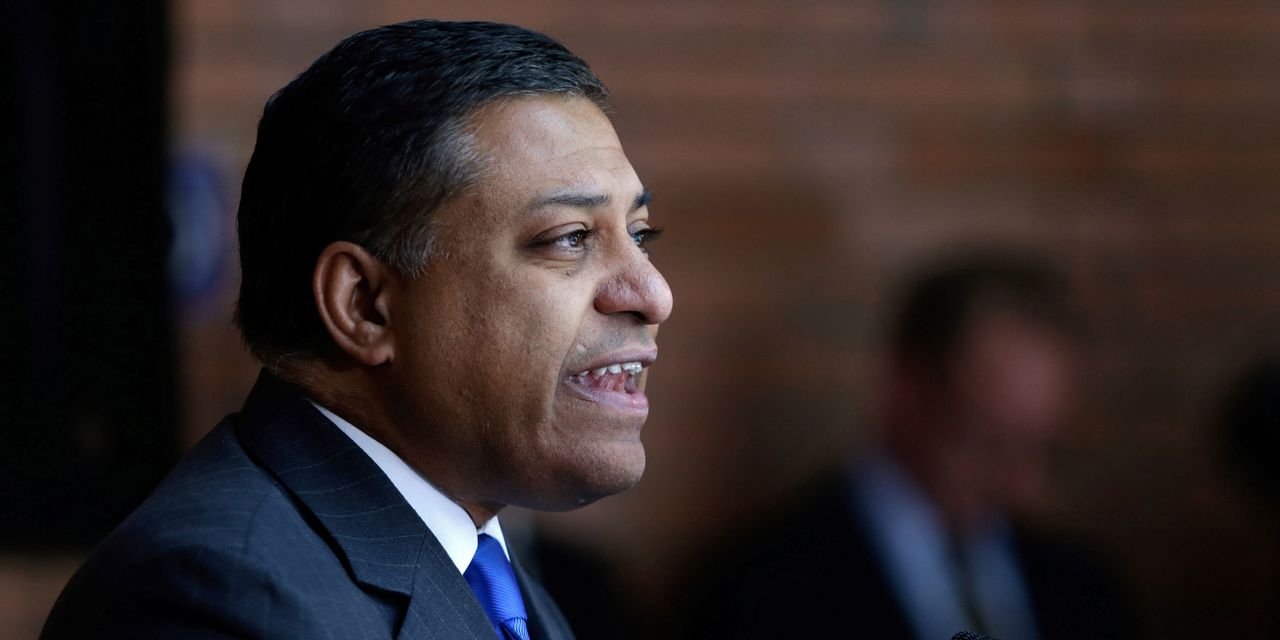
Xylazine is legitimately used by veterinarians to sedate horses and other large animals. In humans, it can dangerously slow breathing and heart rate, depress blood pressure, and with repeated use cause severe skin wounds and rotting tissue that in some cases require amputation. “As a physician, I’ve never seen wounds this bad at this scale,” Dr. Rahul Gupta, director of the White House Office of National Drug Control Policy, said on a call with reporters Monday. “If we thought fentanyl was dangerous, fentanyl combined with xylazine is even deadlier.”
The Biden administration in April labeled the fentanyl-xylazine cocktail an “emerging threat,” a designation that helps the federal government coordinate resources and requires the Office of National Drug Control Policy, in collaboration with other federal agencies, to issue a response plan within 90 days. The April action was the first time the Office of National Drug Control Policy had used the authority, established under a 2018 law, to use the designation for fast-growing drug hazards.
The response plan is the latest in a string of steps the federal government has taken this year to combat the fast-growing threat from the tranquilizer. The U.S. Food and Drug Administration announced in February that it was restricting illegal imports of xylazine due to the public health concern. The Drug Enforcement Administration in March warned that xylazine mixed with fentanyl was a “widespread threat,” noting that 23% of fentanyl powder and 7% of fentanyl pills seized by the DEA in 2022 contained xylazine.
The growing prevalence of xylazine mixed with fentanyl complicates efforts to reverse opioid overdoses. The FDA in March approved Narcan, an opioid overdose reversal medication, for over-the-counter use. But people using fentanyl mixed with xylazine may be less responsive to the treatment because xylazine is not an opioid. Narcan, or naloxone, should still be used if someone is suffering a drug poisoning, experts say.
The response plan released Tuesday also calls for possible regulation of xylazine under the Controlled Substances Act while maintaining its legitimate availability in veterinary medicine and tracking down and disrupting the illicit supply chain. “We know that xylazine is coming from online vendors overseas, including those in China, and is mixed into drugs in the United States,” Gupta said on the call Monday. Diverted veterinary xylazine is also coming from Puerto Rico, and some drug traffickers are mixing the tranquilizer into fentanyl in Mexico, he said.
Bipartisan legislation introduced earlier this year would categorize xylazine as a schedule 3 drug and let the DEA track manufacturing of the tranquilizer to ensure it’s not diverted to the illicit market.
Read the full article here