



 English
 Français
 Deutsch
 Italiano
 Português
 Русский
 Español
 简体中文
简体中文 हिन्दी
 日本語
日本語
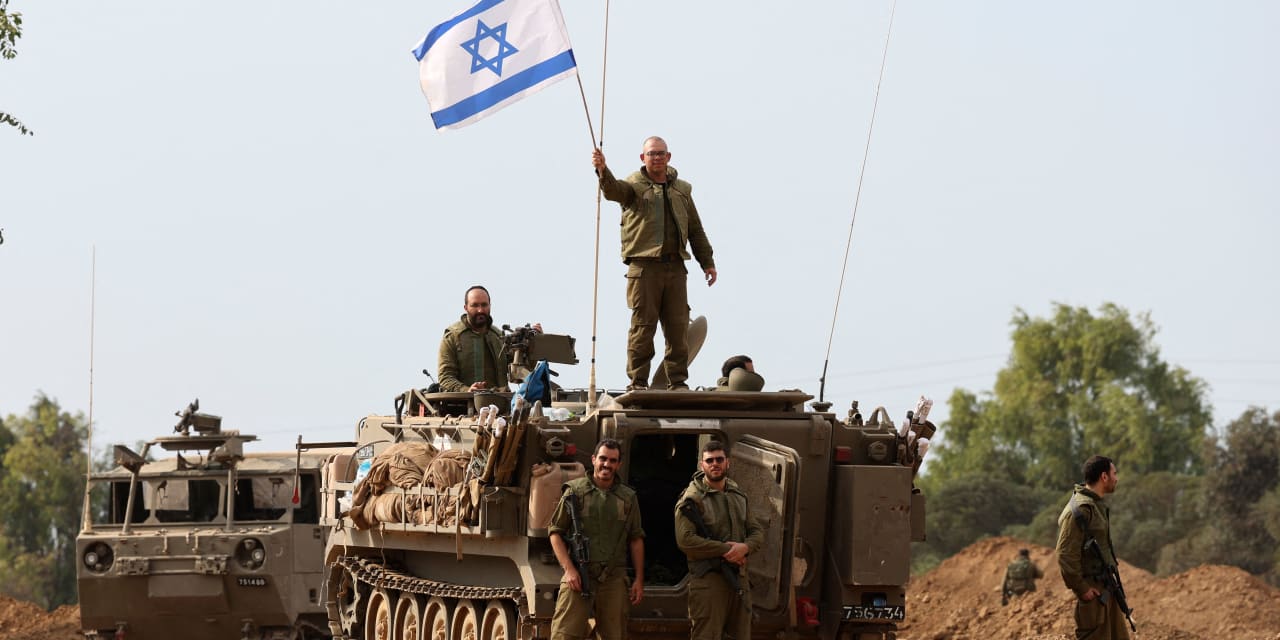
The stock market’s reaction to the war between Israel and Hamas has been fairly muted so far, and if history is any guide, it could continue to shrug off the conflict.
Hamas launched a surprise attack against Israel over the weekend, resulting in hundreds of deaths and thousands of wounded in the first few days. And while oil prices surged, stocks climbed this week, with the
S&P 500
and
Dow Jones Industrial Average
gaining 1.4% and 1.2%, respectively, as of Tuesday morning.
The stock market had a relatively mild reaction, as well, after Russia’s invasion of Ukraine in 2022. Although shares tumbled in the days leading up to the attack, when the invasion happened the S&P 500 stayed relatively flat and ended 7% higher about one month later.
Markets also recovered quickly following the Sept. 11 terrorist attacks in 2001. They were shut down after the attacks until Sept. 17, and when trading restarted, stocks fell sharply in the immediate few days, but soon gained ground again.
French asset manager
Amundi
looked into two dozen international crises that have occurred in the past eight decades—from Pearl Harbor to the second Iraq war. The list also included crises that weren’t geopolitical conflicts, including the Covid-19 pandemic and the collapse of Bear Stearns.
During events driven by geopolitical conflicts, the Dow Jones Industrial Average dropped by an average of 3.6%, but the market returned to positive territory six months later in all but three cases—when Japan attacked Pearl Harbor in 1941, the U.S. invaded Grenada in 1983, and the U.S. bombed Libya in 1986.
Six months after the Pearl Harbor attack, the Dow Jones Industrial Average was 10% lower. For the other two cases, the index was down 3.2% and 1%, respectively, a half year after the events, according to Amundi.
It doesn’t mean, however, that events such as the Israel-Hamas war have little impact on the global economy—just that markets need more time to monitor and understand the long-term implications.
“Geopolitical risk doesn’t tend to linger long in markets but there are many second-order impacts that could come through in the weeks, months, and years ahead from this weekends’ developments,” said
Deutsche Bank
strategist Jim Reid.
How Saudi Arabia, Iran, and the U.S. react will be key.
Clocktower strategist Marko Papic wrote on Sunday that conflicts involving Israel and its immediate Arab neighbors haven’t had a lasting impact on oil prices this century, because few regional powers are interested in supporting Palestinians as broader Muslim unity on the issue has waned.
More concerning is the prospect of tighter sanctions on Iran. Iranian officials have denied the country’s involvement in the latest violence, but a spokesman for Hamas told the BBC the group received backing from Iran for the attacks. If confirmed, the U.S. could increase oil sanctions and enforcement, a move that could cut supply and increase energy prices.
Write to Evie Liu at [email protected]
Read the full article here